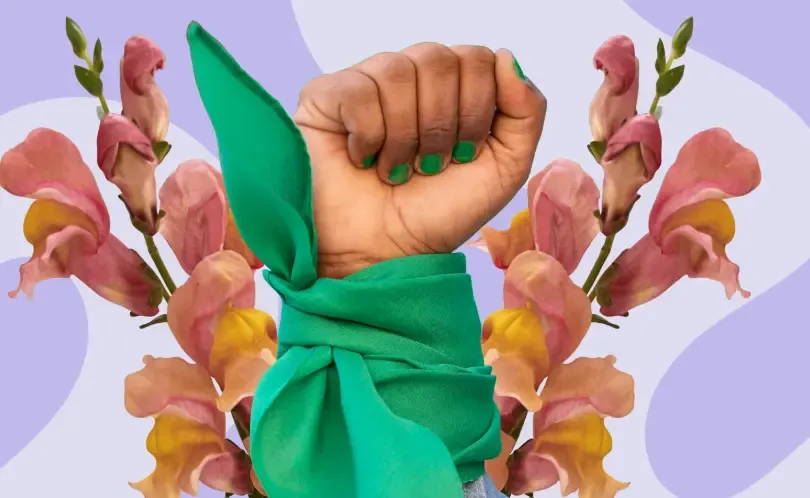
Two weeks ago, September 28th was commemorated as the Global Day of Action for Safe Abortion. Every year, this is a real special date for everyone committed to helping others make decisions about their lives and projects. It serves as an important reminder that the right to abortion transcends political discourse; it fundamentally concerns justice, dignity, and the sanctity of life.
It is not the first time that, around this date, close people, family, or friends ask me why I talk about abortion, why I dedicate myself to this cause. Sometimes, they even tell me that it is a “difficult” cause.
A difficult cause?
Of course, I hear the stigma talking. The stigma we all have grown up with. But no, abortion is not a difficult cause; it is a cause of freedom, life, and possibilities.
Tomorrow, October 11, we celebrate the International Day of the Girl. Personally, I love that these two dates are so close together because during this time, I always find the answers to why I dedicate my life to bodily autonomy. It is my mission. Not for myself, but for my girl, my most vulnerable version.
When I speak of bodily autonomy, I do not do so to avoid saying the word “abortion.” I do it because I want to discuss more issues: to include the right to decide how we talk about our bodies, who has an opinion about them, who touches them, and with whom we share our sexual lives. I speak of all possible ways to live our bodies free from violence.
I grew up in Colombia, a country in Latin America, which is the only region in the world where pregnancies and births among girls under 14 years old continue to rise1.
At 12 or 13 years old, I loved (and still love) rock music. I went to my first concert of Kraken at the Jorge Eliécer Gaitán Theater. I went with my older cousin, because I was not old enough to take care of myself or attend a concert unaccompanied.
At that same age, 2 out of 100 girls in the region were forced to give birth2. Girls who still need permission to go out at night are now burdened with imposed motherhood. Since 2009, these pregnancies have been acknowledged as a form of sexual violence, yet we still find ourselves in a region where they are largely ignored.
My cousin was my safe haven. Not only was he older, but he also had experience and knew how to take care of me. I was fortunate to have him in my life and to be able to experience incredible things that my parents would never have allowed me to do alone, because they trusted him.
We went to see Iron Maiden, Kraken, went out to bars, parties, and road trips with Therion playing in the background, a lot of rock and more rock. I have always been grateful for being that refuge. But over the years, I came to understand the privilege that this entailed: having grown up in a region where many girls do not have a safe harbor, but rather the opposite. Where girls forced to carry pregnancies resulting from sexual violence were mostly abused by people within their own circle of trust, including family members.3.
While I was fortunate enough to attend concerts, explore my tastes, and begin to understand my identity within a circle of trust, seven girls my age in Ecuador were giving birth. Many of them not only suffered from sexual violence but also institutional violence, being criminalized for abortion. According to Human Rights Watch, in 2021, 12% of those criminalized for abortion were minors.4.
I am sure that all the experiences I had with my cousin shaped who I am. I still embrace the rebellion of rock in the way I understand my work, my cause, and my life. Rock music allowed me to grow up with strong and disruptive role models (mostly men) who taught me the importance of building my own narrative. Over time, I had to apply a gender filter, of course, but they instilled in me a deep desire for freedom. A freedom that has marched every 28S.
Why I march on 28S
I don’t march for myself; I march for all the girls who come after me. Because our bodies should not be territories of criminalization, laws, and violence. They should be territories of identity, joy, and love.
I know that just as these experiences have marked my life, forced pregnancies mark the lives of those girls: in their physical health, as they are high-risk pregnancies, in their mental health, in their life plans, and in their economic well-being5.
Many of them will even grow up in poverty. Of course, if they survive, because the risk of dying during childbirth is four times greater for a girl than for an adult woman6.
September 28 and October 11 are not just two dates on the calendar; they are a single thread that connects the rights of women and girls to grow without fear, with the freedom to make decisions about their bodies and their lives.
Because when we defend the right to abortion, we are also defending every girl’s right to imagine and build her own future. We uphold the right of each woman and person capable of gestation to decide on their life project.
And for those who worry that my cause is “difficult,” the truth is that my cause is not difficult; what is difficult are the statistics regarding the violence we endure, and the fact that so many people continue to believe that the problem is abortion.
The truth is that many people do not understand what the real problem is, and this is due to a lack of information.
Therefore, at Viva Futura, we believe that evidence-based information can facilitate the essential dialogues we need: at decision-making tables, to ensure that public policies truly protect girls (the decriminalization of abortion is necessary), and also at family gatherings, so that all girls know which adults they can trust if they are experiencing any form of violence.
Information is powerful. Shall we bring this conversation to the table?
Happy Day to all girls: for free, rebellious, and confident childhoods.
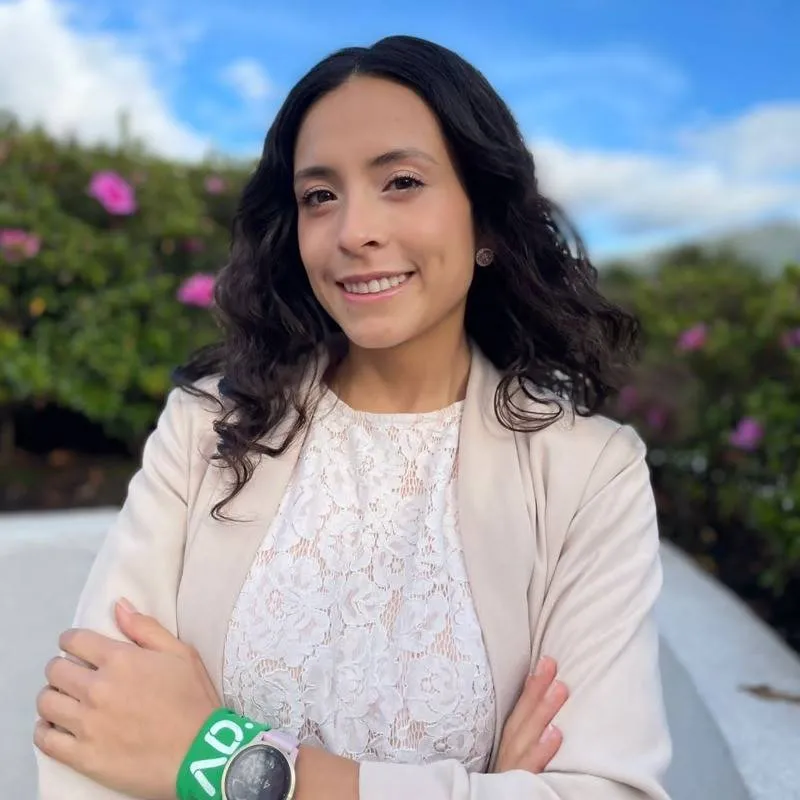
Created by: Lina López, Director of Viva Futura and advocate for the right to abortion.